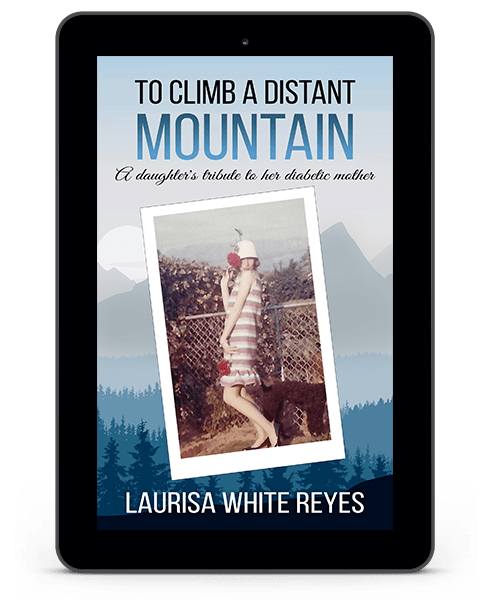
To Climb a Distant Mountain:

A Daughter’s Tribute to Her Diabetic Mother

by Laurisa White Reyes

Genre: Historical True Memoir


One woman’s inspirational tale about expressing joy amid loss and suffering.


To Climb a Distant Mountain:

A Daughter’s Tribute to Her Diabetic Mother

by Laurisa White Reyes

Genre: Historical True Memoir


In 1974, at the age of twenty-six, Cynthia Ball White was diagnosed with Juvenile Diabetes. Today, it is estimated that 1.25 million Americans suffer from what is now referred to as Type I diabetes, compared to 38 million who have Type 2 (adult onset) diabetes. It is a merciless disease that often leads to blindness, neuropathy, amputations, and a host of other ailments, including a shortened life span.

Despite battling diabetes for forty-five years, Cyndi beat the odds. Not only did she outlive the average Type I diabetic, but until her last week of life in 2021, she had all her “parts intact”. Her daughter often called her a walking miracle. But more impressive was Cyndi’s positive outlook on life, even in the midst of tremendous loss and suffering.

The author hopes that in sharing Cyndi’s story, others may be inspired to face their own struggles with the same faith, courage, and joy as her mother did.


Amazon * B&N * Bookbub * Goodreads


I’m going to tell you about my mother. Yes, that is the story I will tell. No other story really matters. I know that now. Funny, how you can spend a lifetime conjuring up magical tales of dragons and enchanters and heroes who will never exist except in your own head and on sheets of paper, when the stories that matter most happen every day all around us. I’ve spent most of my life making up stories. It’s what I do. But now that Mom is gone, I have no stories left. At least none that I care about more than hers.

My first distinct memory of my mother (I was five or six) was in the hospital. I’d come to know that hospital well. It’s in Panorama City, half an hour from where I live now, half an hour from where I lived then, two different cities—two points on the circumference of a circle with the hospital at its center. It’s where all five of my children were born, where my youngest brother was born—and died. It’s where Mom would spend too much of her life. But not yet. That would come later.

I remember the elevator doors opening and Dad pushing Mom out in a wheelchair. She wore a yellow robe that a friend had bought her when she got sick. She had crocheted me a hat. It was yellow too, criss-crossed strands like a spider’s web, with a green band. She gave it to me there. I wore it often as a child. Somewhere, I have a picture of me wearing it. The hat is in my mother’s hope chest now, the one she passed on to me when I got married. Been in there for years. Decades. It’s still a treasure.

I remember her disappearing back inside the elevator, waving, the doors sliding shut, swallowing her. I still feel sick, tight and hollow inside, when I think of that memory.

In the weeks leading up to that hospital stay, which would be the first of dozens, she’d been sick. She’d lost weight and felt very ill. She thought she was dying of cancer, but she postponed seeing a doctor because she had recently enrolled in Kaiser Permanente medical insurance through Dad’s employer, and she thought they had to wait for their membership cards to come in the mail. By the time she walked into the ER, she was on death’s door.

Her doctor smelled her breath, which Mom thought was an odd thing to do. And then he called in other doctors to smell her breath. It smelled sweet, like decaying fruit. Mom was diagnosed with Type 1 diabetes, which they used to call Juvenile Diabetes. It meant that her pancreas had completely malfunctioned, and she would be insulin-dependent the rest of her life. She learned how to give herself insulin by injecting oranges. She was twenty-six years old.

Mom actually felt relieved because it wasn’t cancer. There was no way to know then what diabetes would do to her, how it would shape not only her life but the lives of her husband and children and grandchildren, how it would gradually destroy her body a little at a time until it finally robbed her of life itself.


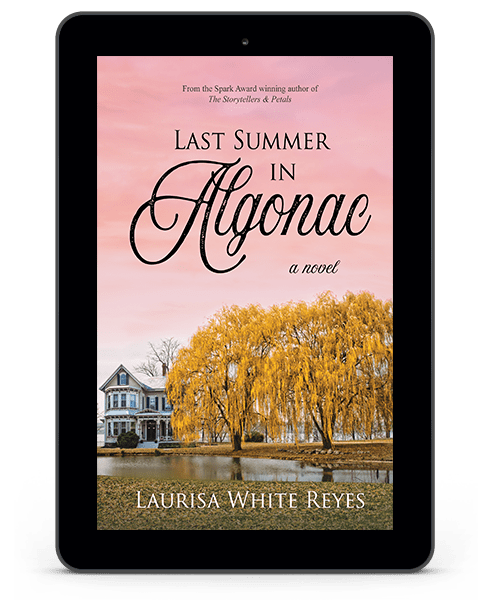
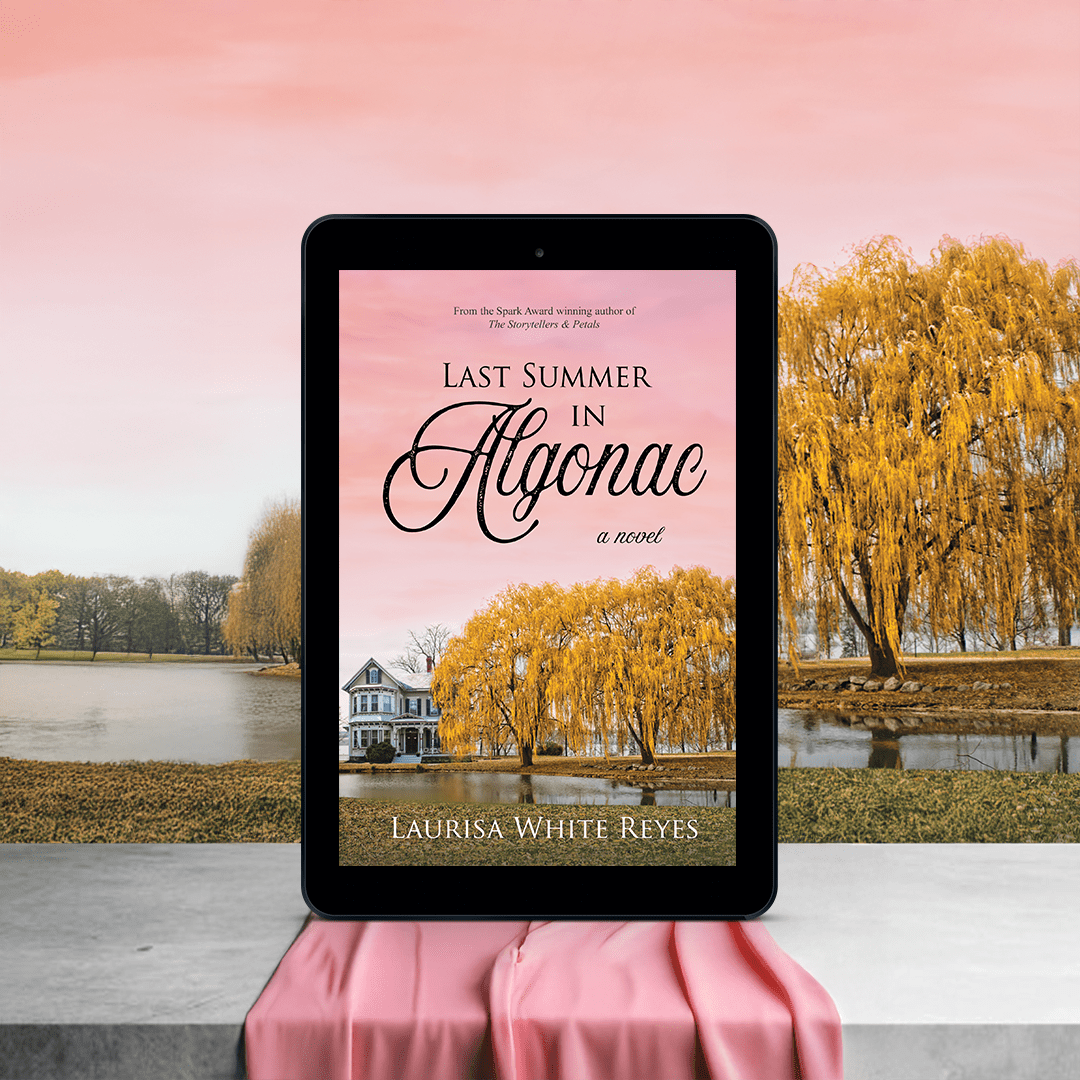
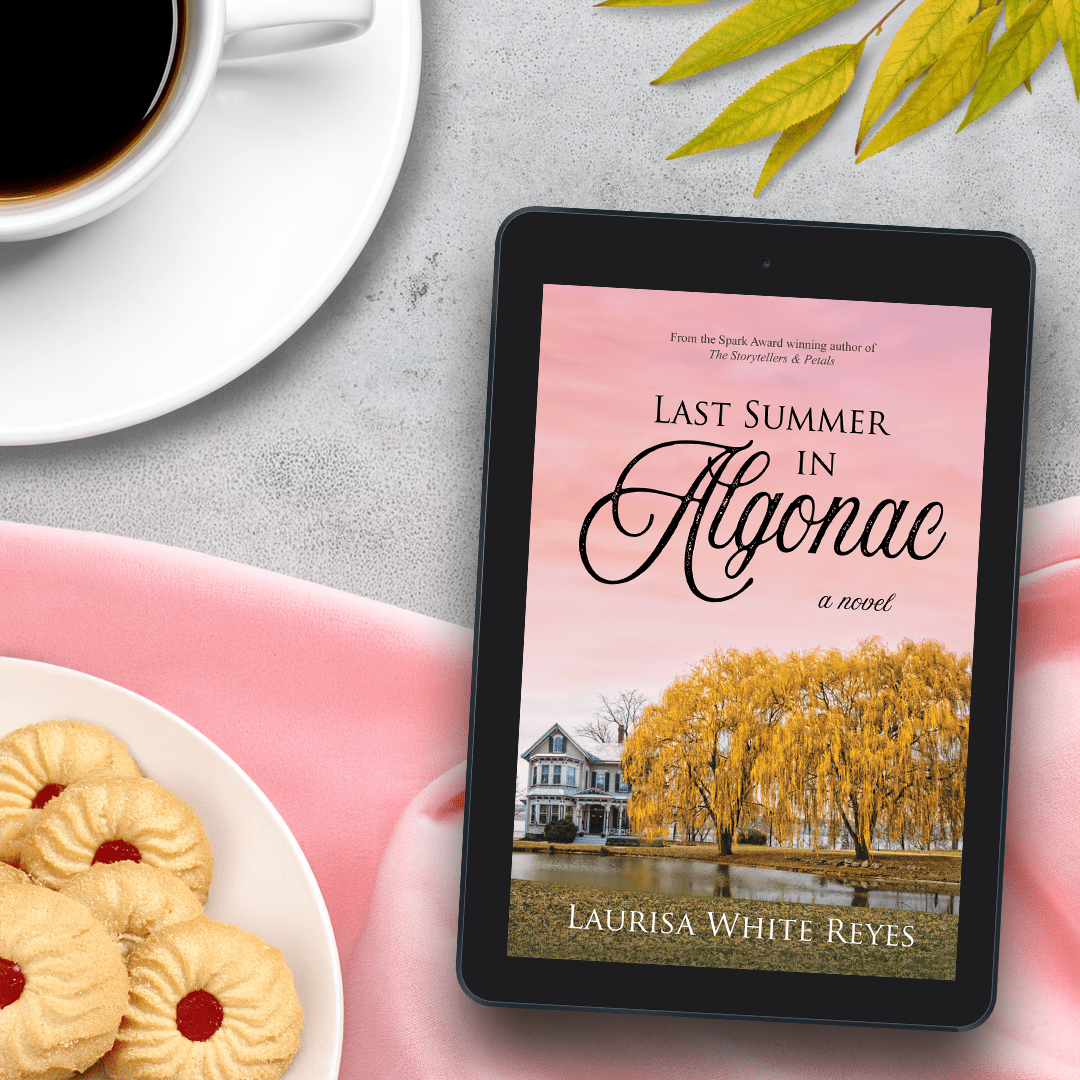
Last Summer in Algonac

by Laurisa White Reyes

Genre: Fictionalized Family Biography


From the Spark Award-winning author of The Storytellers & Petals

The summer of 1938 is idyllic for fourteen-year-old Dorothy Ann Reid. She’s spent every summer of her life visiting her grandparent’s home on the banks of the St. Clair River in Algonac, Michigan. But unbeknownst to her, this will be her last. As Dorothy and her family pass their time swimming, fishing, and boating, they are blissfully unaware that tragedy lurks just around the corner.

Last Summer in Algonac is a fictionalized account of the author’s grandmother and her family’s final summer before her father’s suicide, which altered their lives forever. Inspired by real people and events, Laurisa Reyes has woven threads of truth with imagination, creating a “what if” tale. No one living today knows the details leading to Bertram Reid’s death, but thanks to decades of letters, personal interviews, historical research, and a visit to Algonac, Reyes attempts to resolve unanswered questions, and provide solace and closure to the Reid family at last.


Amazon * B&N * Bookbub * Goodreads


That last summer in Algonac, there was little water play for Father, who was now fifty-seven. Alberta, who had married less than two years earlier and had recently given birth to her first child, had opted to stay in Cleveland. She and Charles had been my grandest playmates while I was growing up, but now they both had new adult lives and families of their own. Even Charles, who was eleven years my senior (Alberta fourteen years), would prove too occupied with his wife Alice and their baby to venture into any games with me. I supposed Father might have played that role with me when I was young, but I was thirteen now, practically a woman, and neither he nor I dared suggest something so childish as to jump into the river for a splash—except for that one last wonderful afternoon.

Looking back, I wish that I had done it every day—that I had taken his hand and walked with him along the bank under the trees, or sat in the grass and taken off our shoes, letting our feet dangle in the chilled, meandering water. I wish that I had had the courage to ask him more about that old rowboat, whether he had ever taken it all the way across the river to Ontario, Canada, where he and his family had come from originally. I would have liked to have been in that boat with him rowing, his muscles taut under his shirt, his sleeves rolled to the elbow.

We wouldn’t have talked much. Father was a man of few words. But I would have listened to the ripples of the St. Clair lapping against the boat, the gentle cut of the oars through the water, the calls of birds overhead. It would have been enough just to be with him, to see his face turned to the sun, the light glinting off his spectacles, and to have seen traces of a smile on his lips.

1939, the year Father died, was a big year for America. It was the year the World’s Fair opened in New York, and the first shots of World War II were fired in Poland.  The Wizard of Oz premiered at Groman’s Chinese Theater in Hollywood, California, and Lou Gehrig gave his final speech in Yankee Stadium. Theodore Roosevelt had his head dedicated on Mt. Rushmore, and John Steinbeck published The Grapes of Wrath. All in all, it was a monumental year, one I would have liked to have shared with my father. He did live long enough for Amelia Earhart to be officially declared dead after she disappeared over the Atlantic nearly two years earlier, but otherwise, he missed the rest of it.

No child should have to mourn a parent. And if she does, at least things about it should be clear. Unanswered questions that plague one for the rest of one’s life shouldn’t be part of the picture.

Death is normally simple, isn’t it? Someone has a heart attack, or dies in a car accident, or passes away in their sleep from old age. Everyone expects to die sometime, and they wonder how it will happen and why. And when it does, as sad as it is for those left behind, the wonder is laid to rest.

Most of the time.

1939 was a blur. I’d prefer to forget it, quite frankly. But 1938 was worth remembering, especially that summer we spent in Algonac with Grandmother Reid and the family. As long as I could remember, we’d spent every summer on the banks of the St. Clair. As it turned out, it would be my final summer in Algonac. Our last summer together. Of course, I didn’t know it at the time, and I’m glad. If I could have seen seven months into the future, if I had known then how the world as I knew it would all come crashing down, it would have spoiled everything.


Laurisa White Reyes is the author of twenty-one books, including the SCBWI Spark Award-winning novel The Storytellers and the Spark Honor recipient Petals. She is also the Senior Editor at Skyrocket Press and an English instructor at College of the Canyons in Southern California. Her next release, a non-fiction book on the Old Testament, will be released in August 2026 with Cedar Fort Publishing.


Website * Facebook * Bookbub * Amazon * Goodreads


Follow the tour HERE for special content and a giveaway!


Enter the To Climb a Distant Mountain Giveaway Here


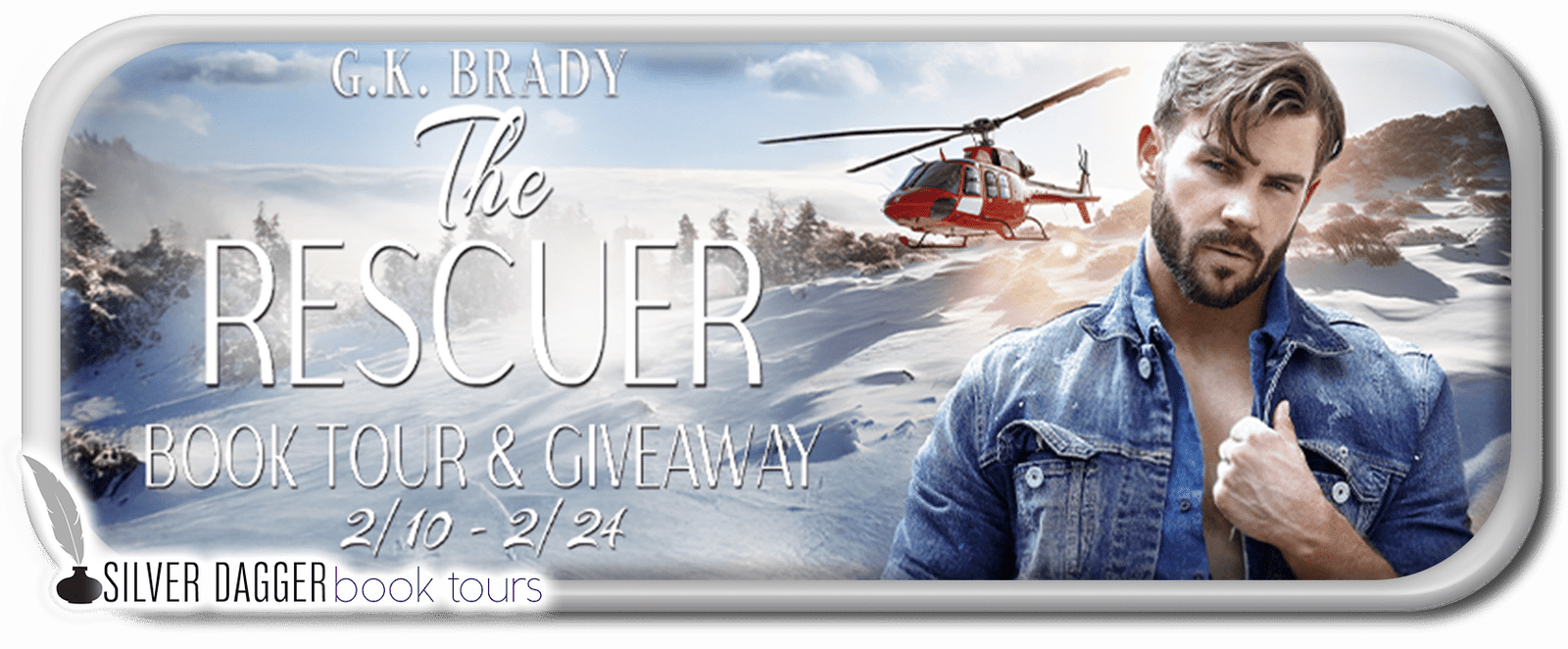
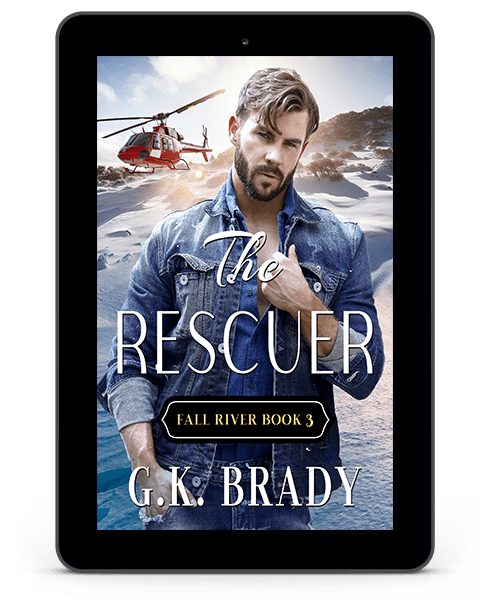
The Rescuer

Fall River Series Book 3

by G.K. Brady

Genre: Small-Town Second Chance Romantic Suspense


She’s moving on. 

He’s running out of time. 

One reckless night changes everything.

The Rescuer

Fall River Series Book 3

by G.K. Brady

Genre: Small-Town Second Chance Romantic Suspense


She’s moving on. He’s running out of time. One reckless night changes everything.

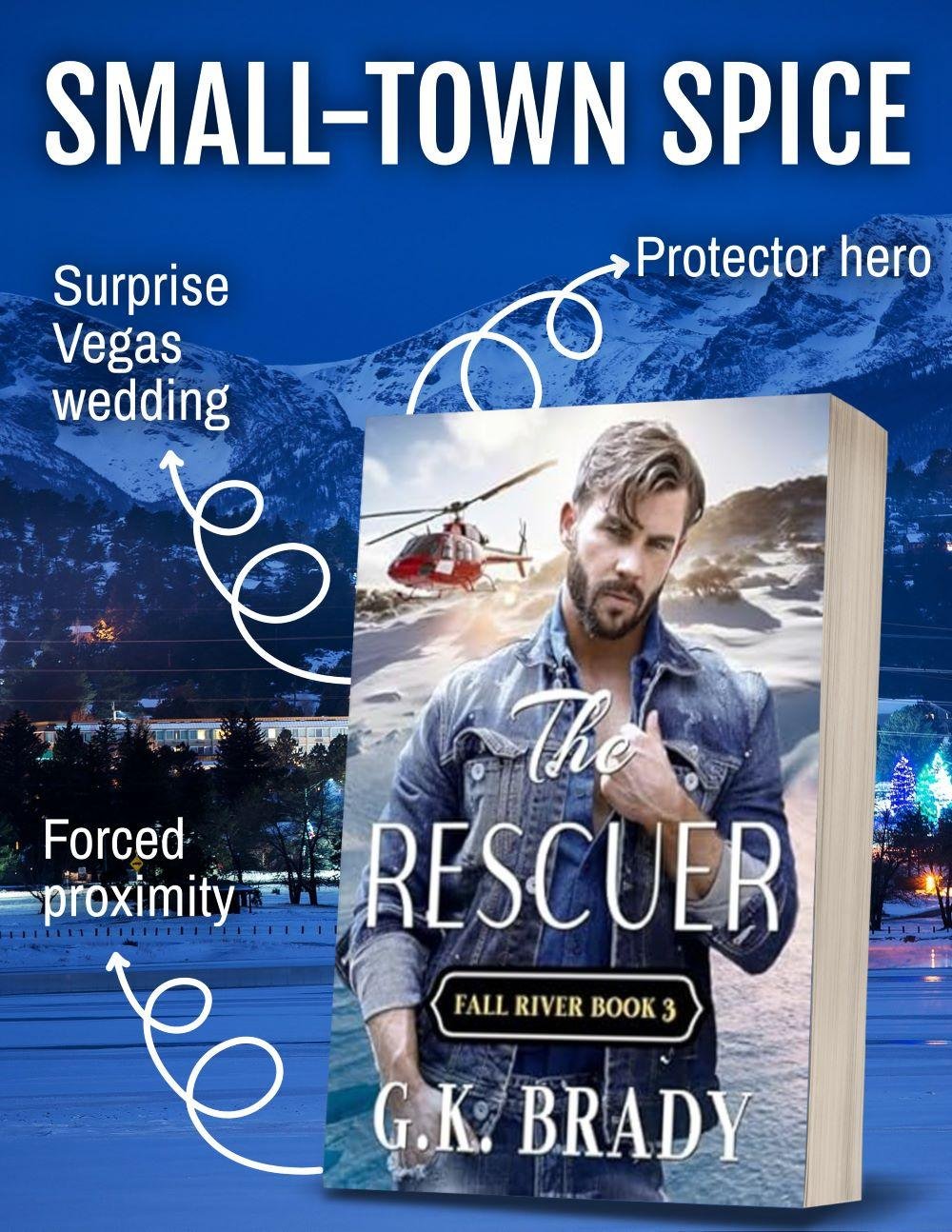
Reece Hunnicutt has spent his life coming to the rescue—whether it’s pulling climbers off treacherous mountain faces or volunteering to string the town’s Christmas lights. But after walking away from the elite search and rescue squad that gave him purpose, Reece is a man untethered, without a landing pad and dodging questions about his future. The one constant in his life? His quiet dedication to his small mountain town and his brothers who have no idea he’s about to embark on a new future that will take him to the other side of the continent.

Town veterinarian Neve Embry has been nursing a one-sided love for Reece since childhood. But she’s done waiting for him to see her as more than a kid sister who needs his protection. Between juggling a struggling clinic and starting up an exciting new relationship with a charming billionaire resort owner, Neve is determined to move on. Sparks might not fly with her new beau, but at least her heart isn’t on the line.

Until one impulsive night in Vegas changes everything.

Waking up married to Reece is the last thing Neve expects—or wants. But when her clinic is vandalized and her life upended, Reece insists on sticking around until the culprit is caught. Forced to live under the same roof, their shaky alliance begins to crack under the weight of their undeniable chemistry.

As danger closes in and secrets come to light, Reece and Neve must confront the truth about their desires—and decide whether this love can be rescued.


Amazon * Bookbub * Goodreads


The urge to giggle had everything to do with nerves and nothing to do with how he looked. No, nothing about his physique was giggle-worthy. If Neve could have crafted the perfect male specimen, he would have looked exactly like Reece. A sculpted torso that started at wide shoulders and tapered to a trim waist, like a V, above a perfectly square butt. Smooth, tan skin.

His back was to her, so she couldn’t assess the man package, but judging by the way it had felt against her in bed, he wasn’t lacking in that department either.

He came to a stop and glanced over his shoulder. “You’re staring.”

She swallowed a yelp.

A slow grin spread over his face—at least the side she could see in profile. “You know what they say. You see mine, I see yours.”

“That’s so childish!” she spluttered. “Besides, you’ve already seen it, and so have I.”

“We were five years old, Neve. I think things have changed since then.”

Details.

She brushed at something tickling her shoulder and looked up. “They have robes in here. His and hers, judging by the sizes.”

“Good because I can’t find a single stitch. Throw one out, would you?”

Hoisting herself to her feet, she slid the smaller robe from its hanger and quickly pulled it on before handing him the other one through the closet door.

“Thanks.” Fabric rustled. “As much fun as it is talking to you through a closet door, I think it’d be much easier if you came out.”

“Are you decent?”

“Always.”

She opened the door and stepped out—and tried not to laugh, especially given the seriousness of their dilemma. The robe hit him at the knees, and the sleeves were halfway up his forearms.

“We need to figure this out,” they both said at the same time.

“Maybe there are some clues in here.” Reece loped toward their adjoining doors, which stood wide open, but before she could follow, he let out a strangled sort of noise from his bedroom.

“What is it?” She hurried through the doorway.

“Found our clothes.”

His bed looked as though a herd of elephants had tap-danced on it. Scattered around said bed were various bits of his and her wedding outfits. Her panties lay in a crumpled heap beside his boxers, and her matching strapless bra hung over a chair that sat cockeyed to the desk. On the nightstand stood two empty champagne bottles, along with a half-dozen martini glasses, also empty.

She gasped and tried not to hurl.

He held up his hands. “Don’t panic.” Traipsing over to the desk, he switched on the lamp and picked up a piece of paper. A groan punched from his lungs.

“What? What is it?”

He locked gazes with her. “You can panic now.”

A mere beat passed, and she was by his side, gawking at what he held in his hands. Her already-unsettled stomach plummeted to her toes. “That’s … that’s …”

“A marriage license. Yeah.”

“It’s got to be a joke. Are those our real names?”

“Looks like.”

He plucked up what looked like a receipt and whipped his head toward her. His eyes dipped to her hand. “Holy Mother of …”

She followed his gaze, and her mouth swung open.

He pointed at her hand. “That is not fake.”

On her left ring finger was a big-ass diamond and a matching band.

Now she darted her eyes to his left hand. “Uh, you seem to be wearing what looks like the man version of mine. These must be fake! Right?”

“Don’t think so.” He held up the receipt.

She covered her mouth to hold back a choked cry. “Is that a six? With four zeros after it?”

“No, that’s an eight.” He rubbed his forehead with his free hand. “Damn! I bought these!”

She inspected the ring, which was almost too big for her small finger. “It is beautiful.”

“I have great taste. Did you have a say in it, or did I just … buy it?”

She blinked. “You’re asking me?”

“You were there, weren’t you?”

“Yeah, I was there, but I was as drunk as you, and everything’s a black hole.”

Dear God, what had they done?


 **Don’t miss the rest of the series! **

Find them on Amazon


Since childhood, all sorts of stories and characters have lived in G.K. Brady’s imagination, elbowing one another for attention, so she’s finally giving them their voice on the written page.


An award-winning writer of contemporary romance, she loves telling tales of the less-than-perfect hero or heroine who transforms with each turn of a page. She also writes historical fiction under the pen name Griffin Brady.


G.K. is a wife and the proud mom of three grown sons. When she’s not writing, she might be reading, traveling, drinking wine, listening to music, or gardening—sometimes all at once! She currently resides in Colorado with her very patient husband.


Website * Facebook  * Instagram * Pinterest * Bookbub * Amazon * Goodreads


Follow the tour HERE for special content and a $10 giveaway!


Enter The Rescuer Giveaway Here